Neurodivergence and HygIene Struggles
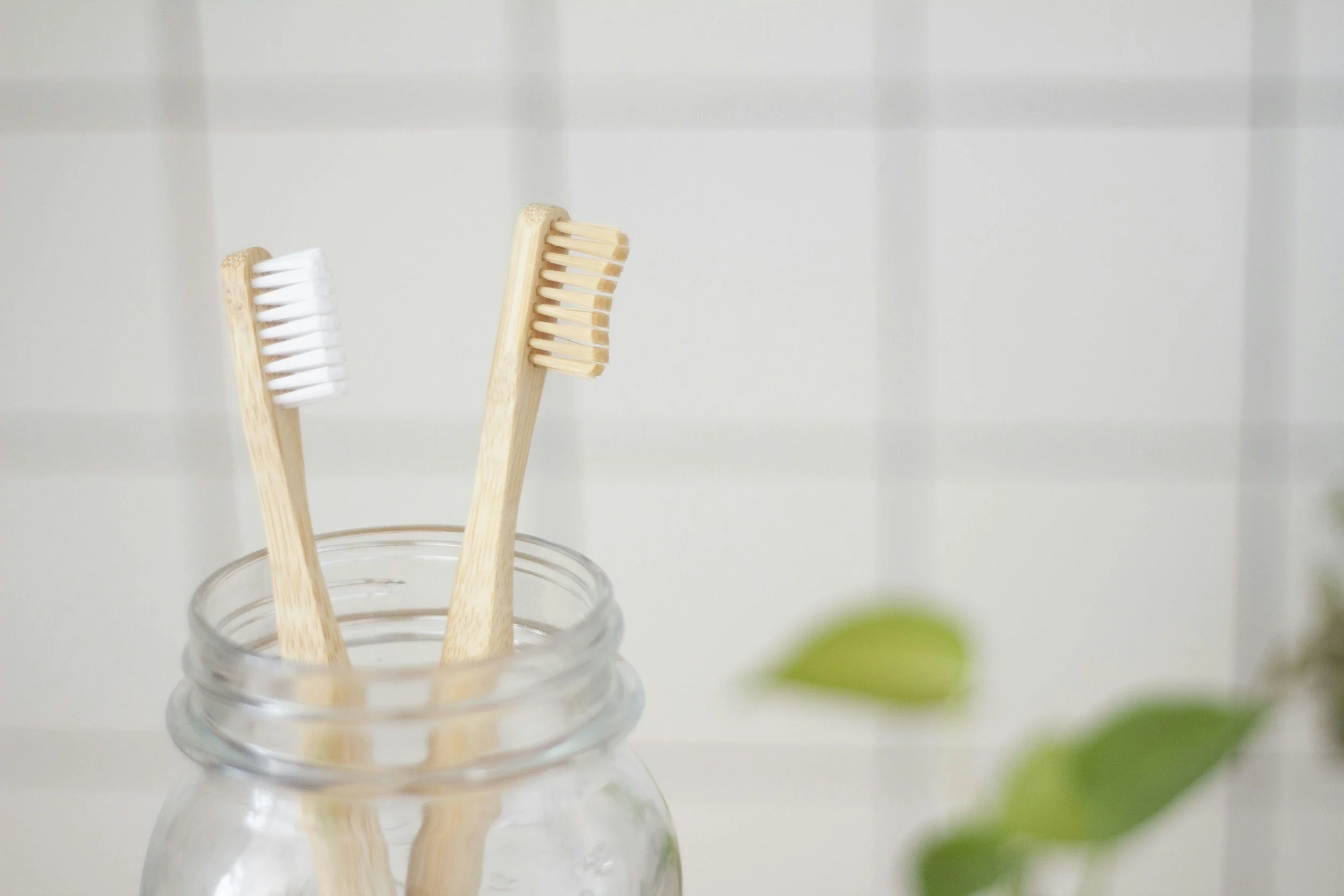
Image shows two new toothbrushes made of bamboo in a mason jar
Due to its potentially embarrassing nature, hygiene can be a less talked about struggle with neurodivergence. Whether you are struggling yourself, or need tips to help your child, here are several ideas that may help.
Bathing/Showering
Make the bathroom an inviting place to be. Spa vibes, special interests, and favorite colors and patterns can all be creative templates in setting up the place where hygiene rituals are most likely to happen. Hanging up fairy lights, painting the wall, dimming the lights, showering by candle light, and incorporating scents that you/your child love can go a long way into making the bathroom an enjoyable or relaxing part of the home.
Address any sensory concerns. Some people find the temperature transition out of the shower or tub to be truly dreadful. Safely setting up a space heater and running it during the bath/shower can help immensely with this transition. Putting an extra bath mat so fewer cold tiles are stepped on can also add a cozy vibe. If sensitivity to smells is a concern, switching to scentless products will help.
Use products that feel special. These can include any of the following: Bath bombs, bath salts, shower steamers, bath paint to decorate the shower wall, bubble bath, bath foam soap (you squirt out the foam to play with and then can use it as soap), nostalgic soaps or shampoos, or the soap or shampoo that you weren’t allowed to get as a kid, bar soap in a cool shape.
Allow for tech time. Allowing a show on a waterproof phone, or on a tablet set on the counter can make bath time so much more enjoyable, or at the very least, provide a distraction.
Listen to music or an audiobook.
Allow for a beverage. There is just something about cracking open a cold soda in a hot shower that feels delightful.
Include special or unconventional toys. Bring in the beach pail and shovel or watercolor paints. If it’s waterproof or easy to clean up, the options greatly expand when we go outside of what is typically associated as a bath toy.
On the hardest days, it may be helpful to allow for body wipes in lieu of traditional bathing.
Teeth brushing
Switching the toothbrush out. If the bristles feel too hard, try a bamboo toothbrush. If the struggle is thoroughness, try an electric toothbrush.
If it’s with your child, use humor. “Which tooth should we brush today? We can only pick one, so which is the tooth that you most don’t want to get cavities?”
Distract with a short show, such as a Youtube short.
General Tips
Body double. Brush your teeth when someone else is. If your child struggles, brush your teeth at the same time.
Reward system for the especially difficult tasks. For example, if you flossed at least three times that week, you can get yourself a little treat at the coffeeshop. For kids (and adults, tbh) a reward system that involves a special interests can go a long way.
Turn it into a game. Can you shower all the main stinky body parts before a song finishes? Can your kid brush your teeth the entire time while watching a Youtube short?
Establish the bare minimum expectation and don’t push it beyond that on the hard days.
Lots of compassion. Validate that it’s hard and that there is no shame in struggling.
Assess for other possible mental health struggles. Depression, generalized anxiety disorder, or OCD can be sneaky sources of hygiene struggles. If the bare minimum expectation is still a massive burden, it may be worth getting assessed.
Address executive functioning struggles. If the main struggle is just getting started, then this particular issue is likely showing up in other areas besides hygiene. It may be worth looking into an executive functioning coach, or trying out ADHD meds to help bridge that gap between knowing and doing. This is a very common struggle for those with ADHD and autism, particularly those with inattentive-type ADHD.
