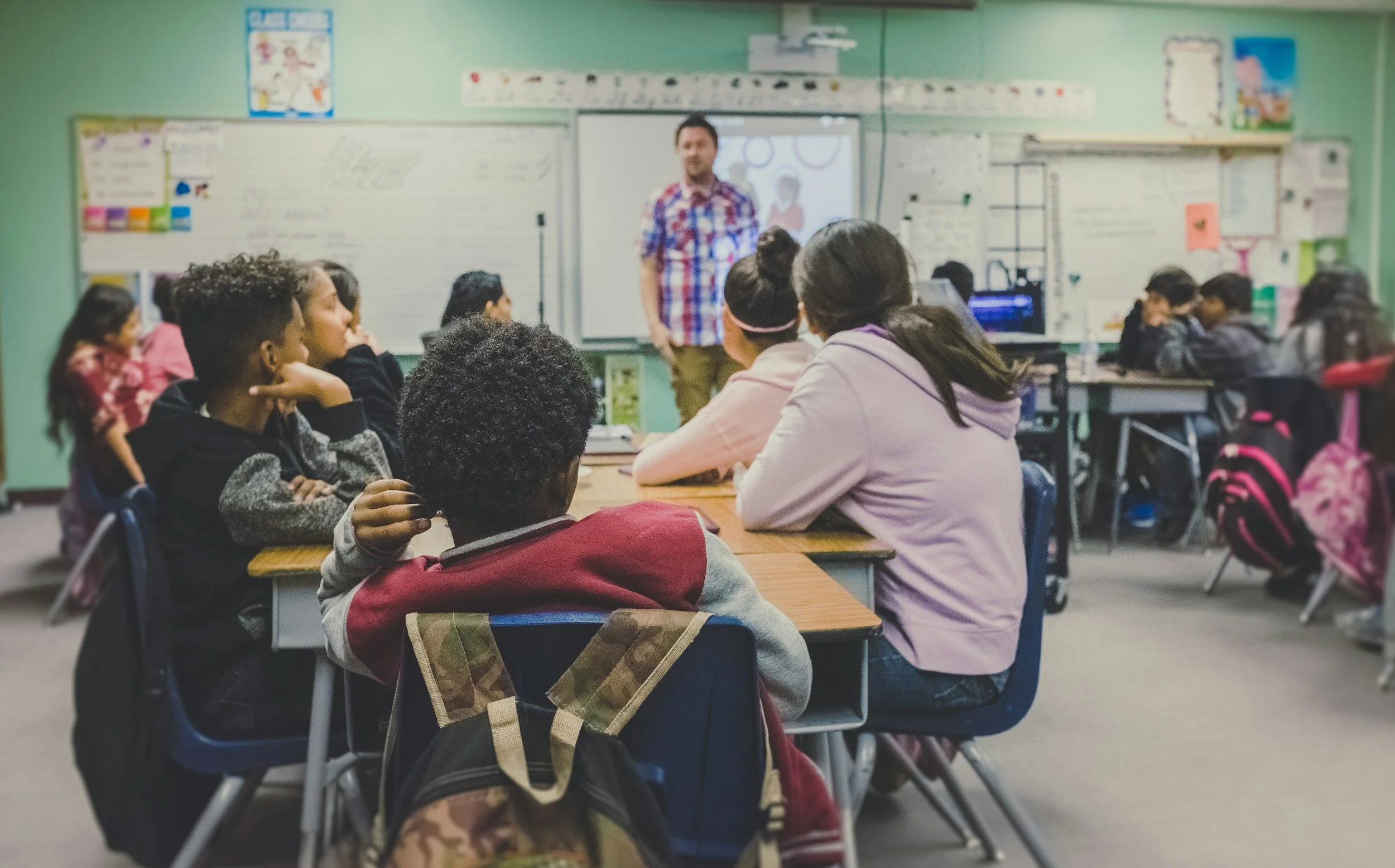
Image shows a group of young teen students in a classroom facing a teacher
Many parents of children with unique needs such as ADHD, autism, PDA, dyslexia, etc. often find themselves wondering which school will best set their child up for success. Some parents come to this question before their child has even stepped foot into a school, as there is so much more pressure these days on parents to enroll their children in the “best” school. Some parents come to this question after having bad experiences with a school and now need an alternative. Whatever your reason, this post will give you some guiding questions and information to help you make your choice.
Which kind of school is best for a kid with autism, ADHD, or other developmental condition?
The neighborhood public school, a specialized charter school, private school, a microschool, homeschool, even unschooling—there are so many options to pick from that it can all be a bit overwhelming. Personally, we found out that just because a school ranks 10/10 on niche.com, didn’t mean it was a 10/10 for a neurodivergent or otherwise disabled child. Because of my own experiences, I’ve put together this guide to help parents who have a student with unique needs.
Some thoughts to consider
Pros of public schools:
legally required to provide a free and public education (FAPE) to all students enrolled at their campus. If they cannot provide an education to a student due to that child’s disability, the school district must use some of their funds to pay for the child to attend a specialized school. This process is long and arduous, but I do know parents who have chosen this route
a public school is more likely to have a psychologist, occupational therapist, and speech therapist on campus
if attending the neighborhood school, the child will live closer to their school friends, making playdates and carpooling more accessible
transportation: if attending the neighborhood school, transportation logistics are usually the easiest of the school options; school provides free transportation
no cost to attend
provides diverse social opportunities
teachers are certified
provides extensive extracurricular activities
Cons of public school:
of all the options, usually has the largest class sizes
not as likely to have specialized programs beyond what they are legally required to provide
depending on location, may be underfunded
public schools typically require the most state testing
Pros of charter schools:
can be specialized to suit a specific population of students, such as gifted students or students interested in STEM
usually have smaller class sizes than a public school
often fosters a strong, close-knit community
Cons of charter schools:
less likely to have a psychologist, speech therapist, and/or occupational therapist on campus and may even refer such services out to the closest public school
not legally required to hire teachers who have teaching degrees/certifications
may charge tuition
less oversight than public school
often uses competitive, lottery-based enrollment
public charter schools often receive less funding
Pros of private schools:
can be specialized to suit a specific population of students, such as gifted students or students interested in STEM
May offer specialized curriculums of certain subjects, which can benefit kids with certain interests
usually have smaller class sizes than a public school
Cons of private schools:
Usually the most expensive (but many do offer reduced rates or scholarships!)
typically less diverse student body and staff
pro or con: reflect the values of its governing body (e.g. religious values, high performance, specialized to one type of student, etc.)
Pros of microschools:
Typically offer specialization in certain subjects, such as math or science, which can benefit kids with those interests
offer small class sizes
each microschool will have its own educational approach
often more flexible than traditional school
Cons of microschools:
Not as common and therefore may have longer commute times
Due to not being as common, may be harder to be accepted
teachers do no have to be certified
parents need to determine if this microschool is essentially a small private school, a structured homeschool environment, etc.
not always set up for long-term sustainability
Pros of homeschooling:
Greatest flexibility for how to spend time and what curriculum to focus on
Child may have more autonomy, such as not needing to wait to eat a snack or use the bathroom
no state testing required
Cons of homeschooling:
The most demanding option for caregivers
Homeschool laws vary between states
often becomes more expensive than expected, and costs typically increase as child ages
Most controversial, as many adults who were homeschooled feel that they were not adequately prepared for college and/or adulthood, or that they only learned what was important to their caregivers
Illegal in some countries
Keep in mind that in spite of not being held to the same legal standards as public schools, many specialized schools truly do go above and beyond for their students. Here are some ways to find out which of these schools can be a good fit:
ask in local Facebook groups. Local parent groups and groups dedicated to special needs are especially gold mines for this information. If you aren’t in a group like this, do a search of “special needs parents of city name or closest big city” or “autism parents of city” or “parents of city”
ask schools for a tour or if they have an open house so you can get a feel for the school and ask questions in person
look at a school’s website
if you are looking to switch out of a school that your child already attends, ask the staff if they know of any good schools for your kids like yours
Questions to ask yourself about the right fit for your family:
How far are we willing to commute?
What is our budget?
Where are my child’s friends attending?
Would changing schools be more disruptive than it’s worth for my child? Does my child need consistency, or a change of scenery?
What are my own fears about attending an ill-fitting school?
I hope this was helpful. If you would like to see a list of parent-approved schools for neurodivergent students in Colorado, please see this post.
If you are a Colorado caregiver in need of mental health or relationship support, please reach out to me at angela@blossomcounselingco.com or learn more about my therapy services here.
